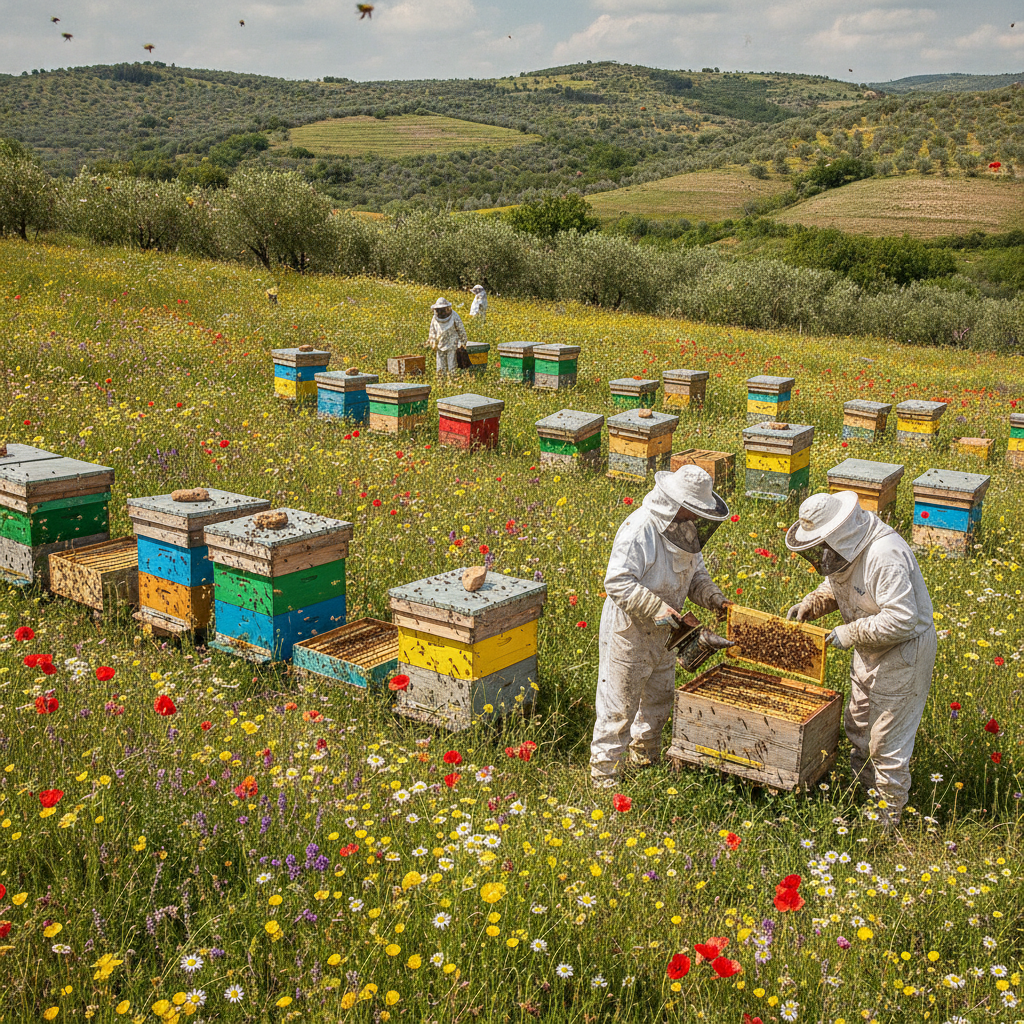
Migratory Beekeeping in Albania: Transport and Regulations
Exploring the practice of migratory beekeeping in Albania, highlighting transport strategies and necessary regulations to optimize honey production.
Albania’s diverse climate zones and rich flora make it an ideal location for migratory beekeeping. This practice enhances honey production by following the seasonal bloom of flowers across different regions. However, ensuring the welfare of the bees and complying with local regulations requires careful planning.
Key Points
- Transport Planning: Essential for avoiding extreme weather and ensuring safety.
- Bee Welfare: Requires optimal transport conditions to minimize stress.
- Local Regulations: Compliance with AKU and Agricultural Institute standards.
- Destination Selection: Rich flora regions like Kukes, Diber, and Shkoder.
- Health Monitoring: Post-migration health checks for pests and diseases.
Transport Planning
Migratory beekeeping in Albania hinges on strategic transport planning to optimize honey production. Selecting the right time to migrate is crucial, avoiding extreme weather conditions that could harm bees. By consulting logistics experts such as ED TRANS and EL TRANS, beekeepers can ensure their bees are safely transported across varying terrains.
Safety During Transport
Ensuring bee safety during transport involves using secure, ventilated frames to prevent stress and loss. Proper ventilation is key to maintaining a stable temperature and airflow, essential for bee health during transit.
Ensuring Bee Welfare
The wellbeing of bees during migration is paramount. Adequate planning can alleviate stress factors otherwise caused by prolonged travel. Utilizing closed, but well-ventilated frames lessens the risk of bees overheating or losing vital energy reserves.
Advanced Transport Solutions
Investing in modern transport solutions can enhance bee welfare. Specialized vehicles equipped with climate control or custom trailers can be used, helping maintain consistent environmental conditions.
Compliance with Local Regulations
Albanian regulations, overseen by the National Food Authority (AKU) and Agricultural Institute, require beekeepers to obtain necessary permits for bee transport. Compliance ensures safety for both bees and local ecosystems.
Understanding Regulatory Frameworks
Beekeepers should familiarize themselves with national regulations to avoid fines and ensure smooth operations. Consulting with authorities and regulatory bodies can provide necessary insights into obtaining permits and preventing legal issues.
Strategic Destination Selection
Choosing the right destination is crucial for successful migratory beekeeping. Regions like Kukes, Diber, and Shkoder, known for their rich, endemic flora, provide abundant nectar sources suitable for honey production. Beekeepers must evaluate potential sites to optimize floral availability.
Flora Rich Zones
These areas offer diverse plant life, ensuring bees have access to a continuous supply of nectar. This approach not only boosts honey quality but also enhances hive strength and productivity.
Monitoring Bee Health
Post-migration, it is critical to monitor bee health to swiftly address any emerging issues such as diseases or pests. Regular health assessments help prevent widespread issues within the hive.
Implementing Health Check Protocols
Developing and adhering to a robust health monitoring plan aids in early detection, making it easier to intervene and treat problems, thereby maintaining hive vitality and productivity.
Other posts
Honey Prices in Albania: Analysis and Regional Comparison
An in-depth look at honey prices in Albania compared to the region and EU, highlighting market competition and development challenges in the beekeeping sector.
Managing Beehives During Summer Heatwaves
Learn essential strategies for managing beehives during intense summer heat, ensuring bee health and optimal honey production.
Planting Native Honey Plants for Bees: A Guide
Planting native honey plants like lavender and wild rose enhances honey production and supports bee health in Albania.