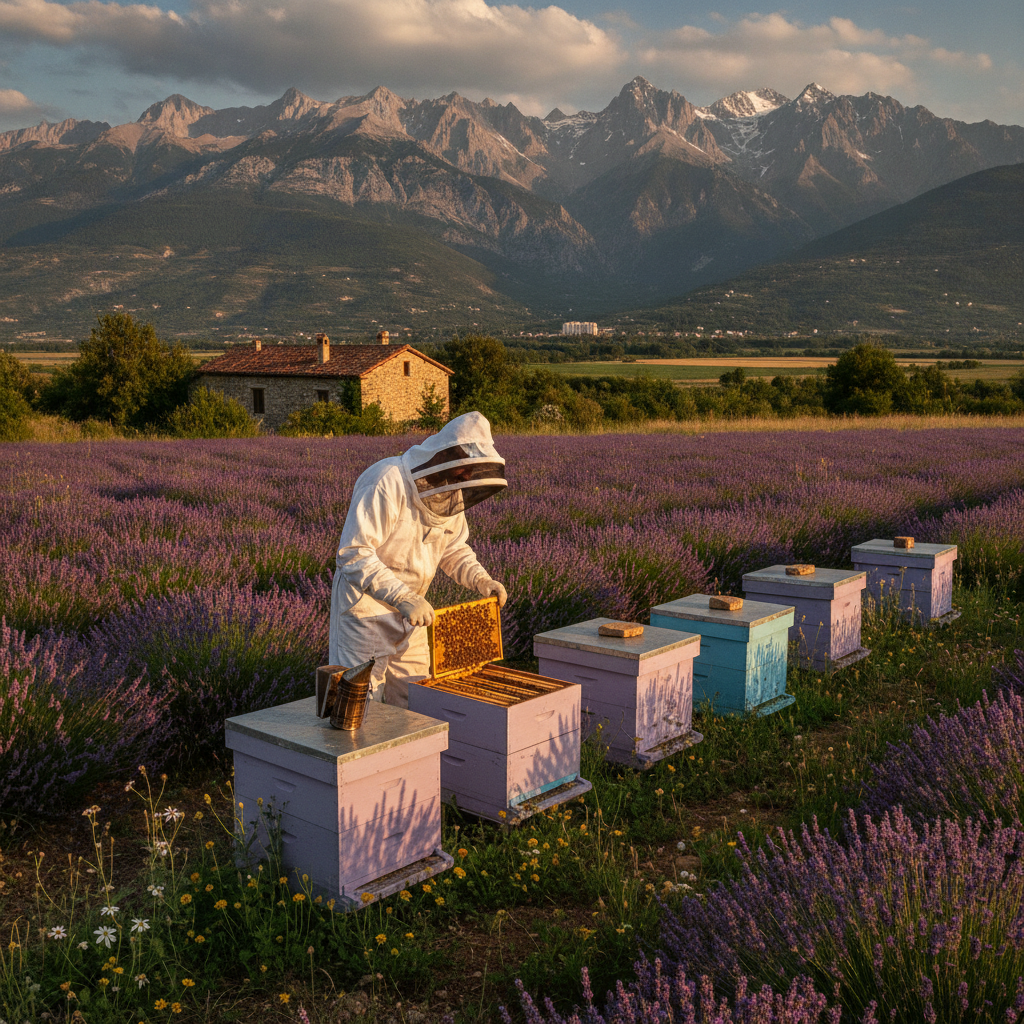
Planting Native Honey Plants for Bees: A Guide
Planting native honey plants like lavender and wild rose enhances honey production and supports bee health in Albania.
Supporting the health of bee colonies and enhancing honey production can significantly impact the beekeeping industry in Albania. Planting native honey plants is a key strategy in achieving these goals. By providing ample nectar and pollen, these plants contribute not only to the wellbeing of bees but also to the diversity and quality of the honey produced.
Key Points
- Planting native honey plants boosts honey production and bee health.
- Lavender, wild rose, and basil flowers are renowned in Albania for their honey-giving properties.
- The new beekeeping law aims to protect native bee populations and support product certification.
- Certification of Albanian honey increases credibility in international markets.
- Honey diversification through native plants contributes to the sustainable development of the beekeeping sector.
The Importance of Planting Native Honey Plants
Native honey plants play a crucial role in maintaining robust bee populations. They offer a continuous supply of nectar and pollen throughout the year, which is essential for bee nutrition and hive productivity. By fostering an environment rich with these plants, beekeepers can ensure healthier bees and higher honey yields.
Lavender and Wild Rose in Albania
Lavender and wild rose are particularly recommended for their abundant nectar and ease of cultivation in Albania's diverse climate zones. The coastal and foothill regions offer ideal growing conditions. These plants are not only valuable for bees but also enhance the landscape and attract tourism, often sought after for their aromatic and medicinal properties.
Learn more about the importance of honey plants.Regulatory Support for Beekeepers
The Albanian government has introduced a new beekeeping law aimed at protecting indigenous bee populations and facilitating product certification. This legislation helps local beekeepers by providing guidelines for sustainable practices and encouraging the use of native plants in beekeeping practices. It also aims to raise the profile of Albanian honey on the international market through certification, which guarantees authenticity and quality.
Check out the beekeeping law.Diversifying Honey Production
Diversification through native plants not only enriches the honey produced but also supports ecological balance. Different plant species yield honey with distinct flavors and nutritional profiles, providing added value to consumers and potentially higher market prices.
The Role of Basil Flowers
Basil flowers, native to the region, are recognized for attracting bees with their high nectar yield. Incorporating basil into planting plans can help sustain bee populations during times when other plants are less productive.
Conclusion: A Sustainable Future
By integrating native honey plants into beekeeping practices, Albanian beekeepers can enhance production, support bee health, and ensure an ecologically sustainable future. These efforts, along with compliance with national regulations, can place Albania as a key player in the global honey market.
Explore the potential of Albanian beekeeping.Other posts
Honey Prices in Albania: Analysis and Regional Comparison
An in-depth look at honey prices in Albania compared to the region and EU, highlighting market competition and development challenges in the beekeeping sector.
Migratory Beekeeping in Albania: Transport and Regulations
Exploring the practice of migratory beekeeping in Albania, highlighting transport strategies and necessary regulations to optimize honey production.
Managing Beehives During Summer Heatwaves
Learn essential strategies for managing beehives during intense summer heat, ensuring bee health and optimal honey production.