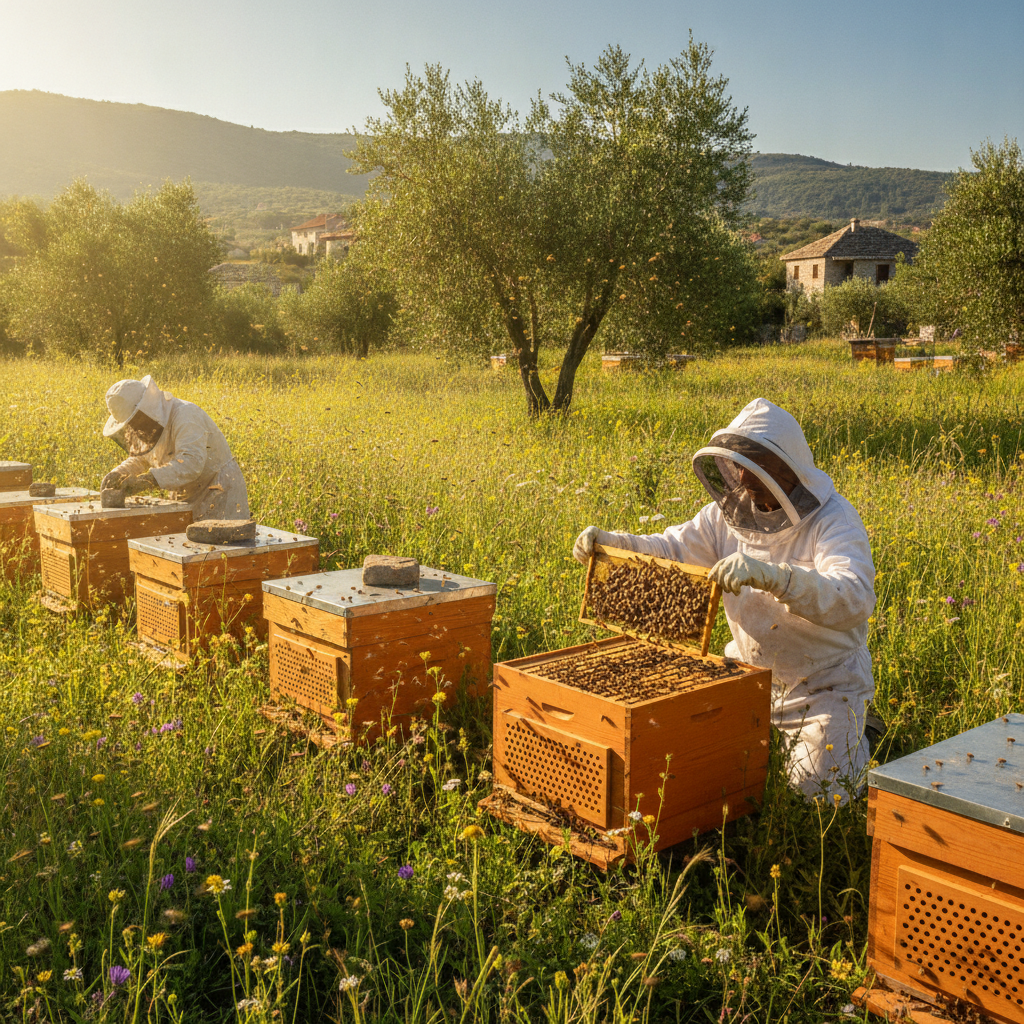
Managing Beehives During Summer Heatwaves
Learn essential strategies for managing beehives during intense summer heat, ensuring bee health and optimal honey production.
Managing beehives during summer heatwaves is crucial for maintaining colony health and optimizing honey production. Beekeepers in Albania face Mediterranean and continental climates, which can bring intense heat, challenging the resilience of bee colonies. This article explores strategies to navigate these conditions effectively.
Key Points
- Ensure adequate hive ventilation to prevent overheating.
- Provide clean water sources near hives to support bee cooling and honey dilution.
- Monitor honey reserves and supplement if necessary to ensure colony survival.
- Be vigilant in managing Varroa mite infestations.
- Prevent robbing behaviors by bees from other hives to protect colonies.
Ensuring Proper Ventilation
High temperatures can cause hives to overheat, potentially stressing bees and affecting their productivity. Proper ventilation is essential. It's recommended to use hives with good airflow or add extra space to improve air circulation. Consider using screens or open-mesh floors, which allow excess heat to escape more efficiently. Find more tips on hive management at this detailed overview.
Providing Water Sources
Bees need water to cool the hives and dilute honey for larvae. Placing a clean, accessible water source near hives ensures bees don't have to travel far, saving energy and time. A shallow dish with stones or floating corks can provide a safe drinking spot without the risk of drowning. Learn more about bees and water needs at UCANR's informative article.
Maintaining Hygiene
Regularly refresh water sources to prevent contamination and algae growth. Clean water is vital not only for bee health but also to avoid attracting pests.
Monitoring Honey Levels
During summer, bees might deplete honey stores quickly. Regularly check honey frames and, if needed, provide supplementary feeding. This might include sugar syrup to keep bees nourished during resource-scarce periods. Detailed management strategies can be found here.
Managing Varroa Mites
Varroa destructor mites pose significant challenges, especially in warm conditions where their reproduction rates can increase. Regular monitoring for these mites is critical. Implement integrated pest management techniques such as drone brood removal or natural miticides. Explore more about seasonal management solutions.
Preventation Techniques
Biotechnical methods, like using screened bottom boards, help in tracking mite populations. Consistent mite counts allow timely interventions and better hive health.
Preventing Robbing
In times of scarcity, bees may engage in robbing, where they invade weaker hives for honey. To prevent this, ensure hives are strong and entrances are reduced to make them easier to defend. It's also helpful to avoid leaving exposed honey or feeding equipment near hives as it can attract unwanted attention from rogue bees. Discover best practice tips for managing hive security.
Strengthening Hive Defenses
Beekeepers should regularly inspect hives for signs of robbing, such as intense fighting at the entrance or increased activity. Adjust hive configurations or use robber screens if needed.
Conclusion
Managing beehives in the sweltering Albanian summer involves proactive solutions to ensure colony resilience. By enhancing ventilation, ensuring water availability, monitoring honey supplies, vigilantly managing pests like Varroa mites, and preventing robbing, beekeepers can sustain healthy colonies and promote robust honey production. Adapting these practices to local conditions supports the long-term vitality of your beekeeping endeavors.
Other posts
Honey Prices in Albania: Analysis and Regional Comparison
An in-depth look at honey prices in Albania compared to the region and EU, highlighting market competition and development challenges in the beekeeping sector.
Migratory Beekeeping in Albania: Transport and Regulations
Exploring the practice of migratory beekeeping in Albania, highlighting transport strategies and necessary regulations to optimize honey production.
Planting Native Honey Plants for Bees: A Guide
Planting native honey plants like lavender and wild rose enhances honey production and supports bee health in Albania.