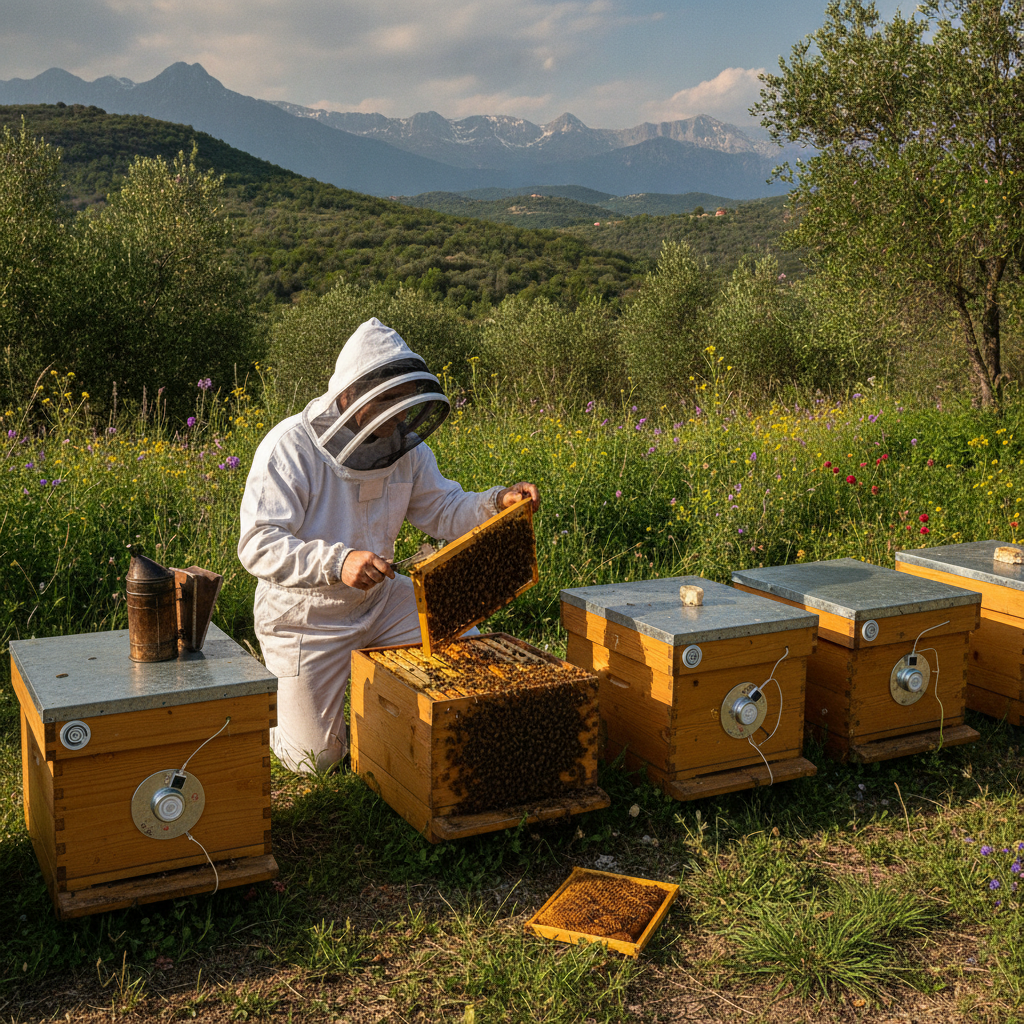
Using IoT Sensors for Beehive Monitoring
IoT sensors elevate beekeeping by providing real-time data on hive conditions, optimizing honey production and enhancing colony health management.
Modern beekeeping is increasingly intertwined with technology. One of the most exciting developments for both seasoned and novice beekeepers is the use of IoT sensors for monitoring beehives. These devices are transforming how we manage colony health and optimize honey production.
Key Points
- Real-time hive condition monitoring using IoT sensors allows early detection of issues like diseases or signs of colony collapse. Alertbee
- Optimizing honey production by monitoring hive weight and bee activity provides valuable data for production management. Ecobees
- Improved colony health management through accurate, real-time data on internal hive conditions. Apiary Sense
- Preventing colony losses with real-time internal hive data. Apiary Sense
- Honey production optimization by monitoring hive weight and bee activity. Ecobees
Transforming Hive Management
Albanian climate conditions pose unique challenges for beekeepers. Utilizing IoT sensors, however, can turn these challenges into opportunities. These devices measure temperature, humidity, and even hive weight, offering insights that were previously difficult to obtain. By detecting abnormal conditions early, beekeepers can intervene timely, preventing potential colony losses.
Real-Time Monitoring
With technologies like those from Alertbee, beekeepers have access to real-time data, enhancing their ability to manage and react to the hive’s needs. This means whether it's a sudden drop in temperature or increased activity indicating swarming, the beekeeper can adapt quickly.
Optimizing Honey Production
In regions such as Albania, where climate conditions vary widely between coastal and mountainous areas, IoT sensors play a crucial role in honey production optimization. By monitoring the hive weight and activity levels through platforms like Ecobees, beekeepers gain valuable data that inform harvesting schedules and production expectations.
Analyzing Hive Data
These sensors provide metrics that allow for better alignment with natural cycles, optimizing when to harvest honey for maximum yield without stressing the bees. By leveraging the weight data, producers can predict the best times for honey extraction, aligning it with factors like flowering and climatic conditions.
Enhancing Colony Health Management
Maintaining bee health is crucial for sustainable beekeeping. IoT technology allows for detailed monitoring of hive conditions, providing insights into temperature, humidity, and bee activity. Such precise monitoring helps detect diseases early, reducing the risk of widespread issues. The technology provided by Apiary Sense highlights how continuous data flow leads to smarter, more responsive health management practices.
Preventing Colony Loss
By recognizing early signs of stress or disease, beekeepers can take proactive measures to preserve their colonies. For instance, maintaining optimal temperature and humidity within the hive is vital, particularly under the Mediterranean climate influences.
Costs and Accessibility
Though implementing IoT technology comes with a financial investment, the benefits—enhanced productivity, better colony health, and potentially greater yields—often justify the cost. With the growing availability and decreasing cost of these technologies, even small-scale Albanian beekeepers can now embrace them.
ROI for Small Beekeepers
For the small beekeeping operations typical in Albanian rural areas, IoT sensors provide a competitive edge by reducing labor and increasing accuracy in hive management. The adaptation and incorporation of such devices open a new frontier for local beekeepers aiming to increase profitability and sustainability.
Embracing IoT sensor technology in beekeeping not only allows for real-time insights but also empowers beekeepers to make informed decisions that enhance the health of their hives and optimize their production, solidifying beekeeping as a forward-looking, technologically savvy agricultural practice.
Other posts

Honey Prices in Albania: Analysis and Regional Comparison
An in-depth look at honey prices in Albania compared to the region and EU, highlighting market competition and development challenges in the beekeeping sector.
Migratory Beekeeping in Albania: Transport and Regulations
Exploring the practice of migratory beekeeping in Albania, highlighting transport strategies and necessary regulations to optimize honey production.
Managing Beehives During Summer Heatwaves
Learn essential strategies for managing beehives during intense summer heat, ensuring bee health and optimal honey production.