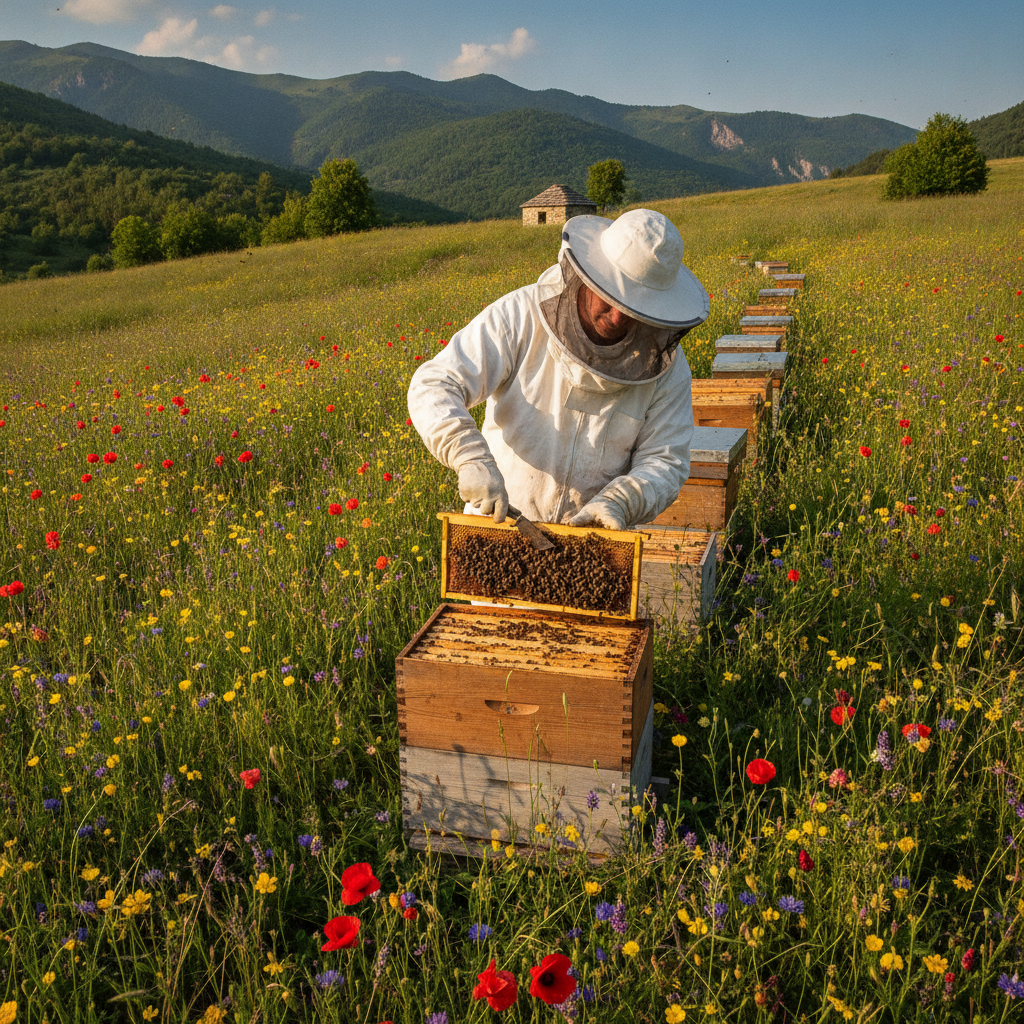
Propolis Production in Albania: Techniques, Quality, and Market
Explore propolis production techniques in Albania, focusing on collection, processing, quality factors, and market potential for economic growth.
Propolis, a resinous substance collected by bees, is a valuable product in the beekeeping industry with significant economic opportunities for Albanian beekeepers. Capitalizing on Albania's Mediterranean climate and rich flora, beekeepers can produce high-quality propolis to meet both local and international demand. Proper processing and careful bee management are essential to ensure a safe and pure product for consumption, contributing to the sustainable development of beekeeping in Albania.
Key Points
- Methods of Propolis Collection: Special grilles in beehives allow for collecting propolis without damaging the colony. (Read more)
- Processing Propolis: To extract active compounds, propolis must be cleaned and extracted with a solvent like 70% alcohol, ensuring a high-quality product. (Read more)
- Quality Influencing Factors: Chemotherapy used in bee control can affect propolis quality; beekeepers must avoid contamination. (Read more)
- Health Benefits: Propolis has antibacterial, antiviral, and antifungal properties, making it valuable for treating various infections. (Read more)
- Market in Albania: Propolis production offers excellent opportunities for Albanian beekeepers, contributing to product diversification and revenue growth.
Methods of Propolis Collection
To successfully harvest propolis, Albanian beekeepers can utilize special grilles or screens installed in hives. These devices encourage bees to deposit propolis in gaps, facilitating efficient collection without distressing the colony. This method is essential for maintaining colony health while optimizing propolis yield.
Tools and Techniques
Grids, designed specifically for propolis collection, are crafted from materials that can withstand various weather conditions typical of Albania’s coastal, plains, and mountainous regions. Well-designed grids allow beekeepers to maximize collection with minimal disruption.
Processing Propolis
Once collected, propolis must undergo processing to unlock its full potential. This includes purification to remove impurities and extraction using solvents like 70% ethanol. This step preserves the valuable active components that contribute to propolis's therapeutic properties.
Purification and Extraction
The extracted propolis undergoes a series of purification steps to remove beeswax, wood chips, and other debris. The resultant concentrated solution is then used in various applications, offering immense medicinal benefits. This ensures the product’s safety and efficacy for consumers.
Factors Affecting Propolis Quality
The quality of propolis is influenced by the beekeeping practices and environmental factors. Chemicals used in beekeeping can contaminate propolis, thus affecting its purity and effectiveness. Therefore, adhering to responsible, organic practices is crucial.
Managing Quality Controls
Beekeepers should implement rigorous quality control processes, considering the specific environmental conditions of their regions. Utilizing natural management methods and minimizing chemical usage can vastly improve product quality.
Market Potential and Opportunities
Propolis has a robust market potential, both domestically and overseas. The growing demand for natural health products presents a lucrative opportunity for Albanian beekeepers to explore. Diversifying into propolis not only boosts income but also enhances the sustainability of beekeeping operations.
Accessing International Markets
Albanian propolis producers can tap into international markets by adhering to global quality standards, obtaining necessary certifications, and establishing strategic export partnerships.
Other posts
Honey Prices in Albania: Analysis and Regional Comparison
An in-depth look at honey prices in Albania compared to the region and EU, highlighting market competition and development challenges in the beekeeping sector.
Migratory Beekeeping in Albania: Transport and Regulations
Exploring the practice of migratory beekeeping in Albania, highlighting transport strategies and necessary regulations to optimize honey production.
Managing Beehives During Summer Heatwaves
Learn essential strategies for managing beehives during intense summer heat, ensuring bee health and optimal honey production.