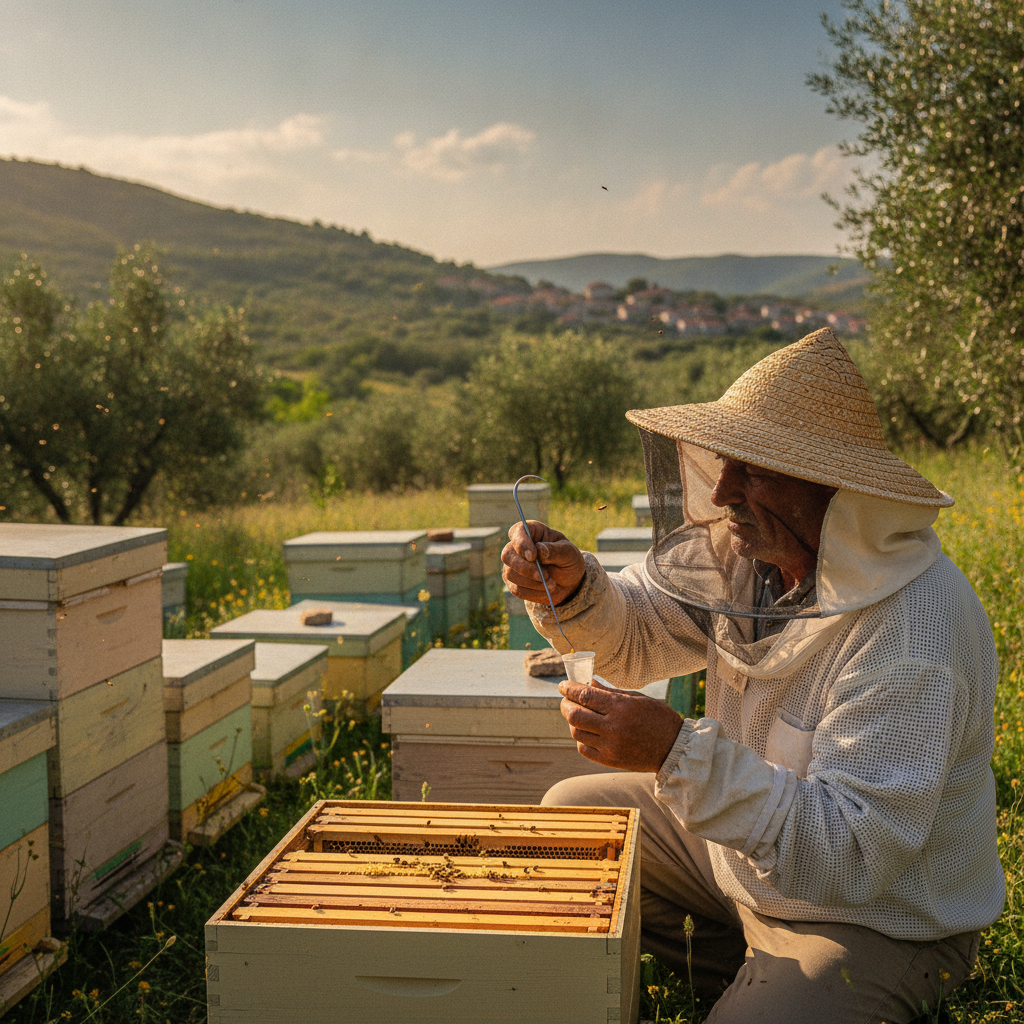
How to Produce Your Own Queens: Simplified Doolittle Method
Learn how the Doolittle method can be adapted to produce high-quality queens in Albania’s unique climate.
Beekeeping requires precision and care, especially when it comes to queen rearing. The Doolittle method offers beekeepers in Albania an effective technique for producing high-quality queens. This method allows precise control over the traits of the queens, vital for maintaining robust and productive bee colonies.
Key Points
- Preparing the Queen Frame: Create a dedicated frame in your bee hive to encourage egg-laying by the queen.
- Larvae Transfer: Use specific tools to move larvae younger than 24 hours to artificial queen cups.
- Starter Colony Placement: Place these cups in a starter bee colony for initial nurturing.
- Final Colony: Transfer the developed larvae to a final colony for complete maturation.
- Incubation Colony: Once the cups are sealed, transfer them to an incubation unit for queen emergence.
Preparing the Queen Frame
To begin, ensure you have a well-prepared queen frame. This involves placing an empty frame into the queen's section of the hive, prompting her to lay eggs. By doing so, you ensure you have young larvae for the grafting stage. Prepared queen frames provide larvae that are ideal for transfer and nurturing.
Creating Ideal Conditions
Ensure your hive conditions are optimal to encourage strong egg-laying and healthy larval development. This may involve managing temperature and humidity, crucial elements in Albania's climate zones.
Larvae Transfer (Grafting)
The next step is the careful transfer of larva, less than 24 hours old, to artificial queen cups. This technique requires a delicate hand and patient execution. Using a grafting tool, transfer the larvae from the prepared queen frame into cups specially designed for queen rearing.
Grafting Tools and Techniques
The use of the correct grafting tools is critical. Specially designed tools allow beekeepers to gently move the larvae, minimizing stress and damage.
Starter Colony
Once the larvae are secured in their cups, they must be placed into a starter colony rich with nurse bees. These bees will feed the larvae with royal jelly, indispensable for queen development. According to queen rearing guides, placing the cups in an appropriately resourced colony ensures the larvae receive the proper nutrition and care.
Maintaining Starter Colony Health
Ensure the starter colony is healthy, with sufficient nurse bees, to maximize the success of queen development. Proper feeding and colony management are key.
Final Colony
After a few days, the larvae will need to be moved to a final colony for further development. In this stage, the cups will be capped, signifying the larvae's progress to the pupation stage.
Monitoring Development
Regular checks will ensure the developing queens are thriving. Each stage needs careful oversight to catch any issues early.
Incubation Colony
Once the queens are sealed in their cups, transfer them to an incubation unit where they will safely emerge. This controlled environment ensures that the queens hatch under optimal conditions, leading to better survival and adaptation rates. Incubation practices emphasize maintaining stable temperatures and moisture levels.
Ensuring Successful Emergence
Careful monitoring of the incubation environment ensures strong, healthy queen bees, ready to lead vibrant and productive colonies.
By carefully applying the Doolittle method under Albania's diverse climate conditions, beekeepers can enhance the quality and resilience of their queen bees. This approach not only supports local ecosystems but also contributes to the economic vitality of beekeeping practices across the region.
Other posts
Honey Prices in Albania: Analysis and Regional Comparison
An in-depth look at honey prices in Albania compared to the region and EU, highlighting market competition and development challenges in the beekeeping sector.
Migratory Beekeeping in Albania: Transport and Regulations
Exploring the practice of migratory beekeeping in Albania, highlighting transport strategies and necessary regulations to optimize honey production.
Managing Beehives During Summer Heatwaves
Learn essential strategies for managing beehives during intense summer heat, ensuring bee health and optimal honey production.