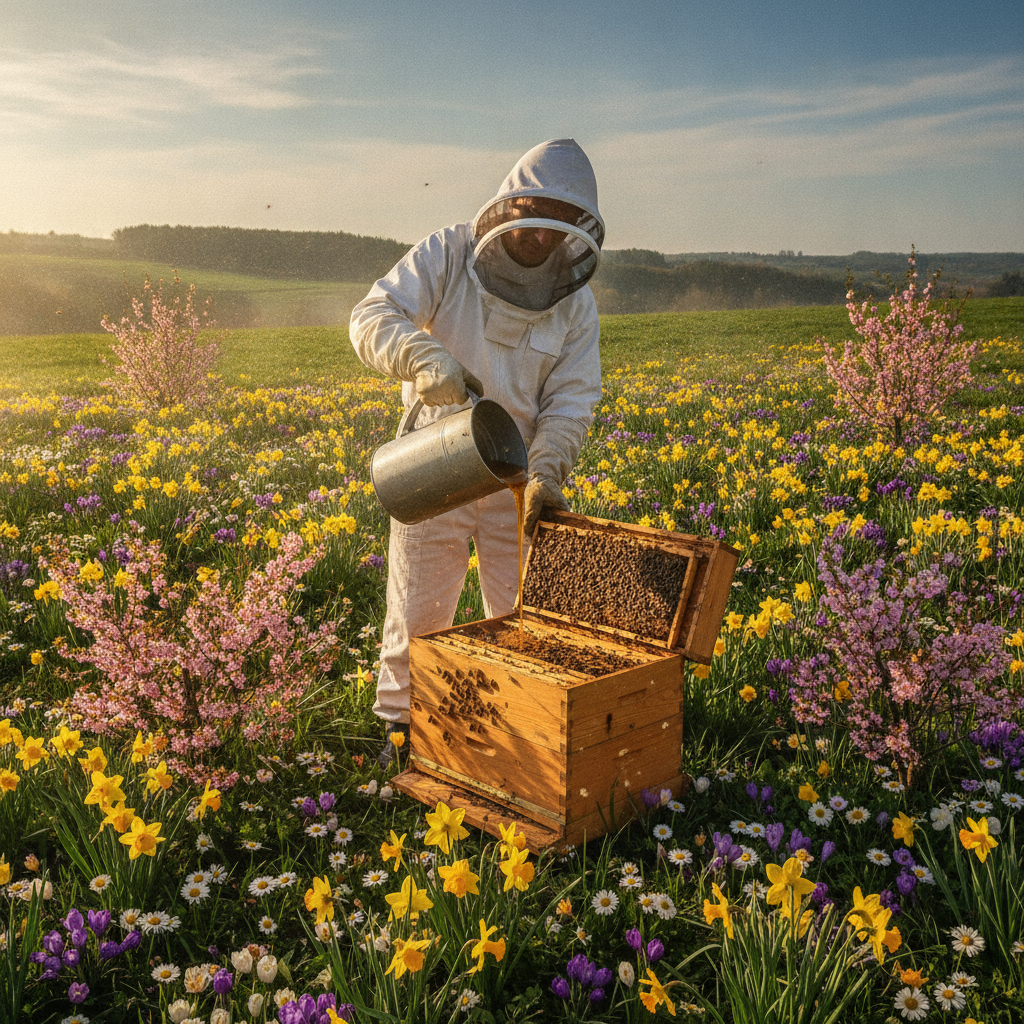
Stimulatory Feeding with Syrup: Dosage and Duration
Discover how to effectively use syrup to stimulate bee colonies in spring. Proper dosage and timing are key for healthy hive development.
In the dynamic world of beekeeping, feeding bees with syrup is a proven method to stimulate colony growth, especially in the spring months. This practice is not only beneficial for bees but also ensures maximum honey production during the flowering season. Understanding how to administer the syrup properly is crucial to avoid health issues and ensure colony strength.
Key Points
- Use a 1:1 syrup ratio for spring stimulation.
- Administer syrup in small, frequent doses to mimic natural nectar flow.
- Use regular white sugar and hot water for syrup preparation.
- Avoid using brown sugar, molasses, or raw sugar to prevent bee health problems.
- Monitor the colony post-feeding to evaluate effectiveness and avoid syrup overloading.
The Importance of Stimulatory Feeding
The practice of stimulatory feeding helps increase the queen's egg-laying activity, leading to a stronger colony with more worker bees ready for the nectar flow. In Albania, where Mediterranean climates offer distinct coastal and mountainous zones, the timing and method of syrup feeding play a vital role in colony success.
Mediterranean Influence
The proximity to the sea moderates temperatures, allowing early blooms. As these early blossoms may not provide enough nectar, stimulatory feeding ensures that colonies have sufficient resources.
Creating the Perfect Syrup
For a successful stimulant, prepare a syrup using a simple formula—one part sugar to one part water. This combination is closest to the natural nectar bees are accustomed to.
Preparation Tips
It’s advised to use hot water to dissolve the sugar thoroughly, ensuring no solids remain. Avoid brown sugar or molasses, as these can introduce harmful substances affecting bees' health. White sugar is ideal as it closely resembles the natural sugars found in nectar.
Administering the Syrup
Feed the syrup to your bees in small, frequent doses, typically 0.3–0.5 liters every two to three days. This simulates a consistent nectar flow, encouraging the colony to expand appropriately without risking syrup fermentation or spoilage.
Best Practices
Introducing syrup in this manner ensures that bees can consume it promptly, maintaining hive sanitation and reducing contamination risks. This method also prevents deterring natural pollen and nectar collection due to overfeeding.
Monitoring Your Colony
Observation is key to assessing the impact of your feeding strategy. After administering the syrup, monitor your bees’ behavior and hive activity.
Signs of a Healthy Response
A thriving colony will show increased activity, with more bees taking flight and returning with pollen. Monitor syrup consumption through feeders and ensure that the colony is not storing excessive amounts, which could lead to a lack of space for honey storage later.
Efficient monitoring and adjustments ensure your colonies are flourishing and preparing for a productive season.
By understanding and applying these principles, beekeepers can optimize spring-time colony growth, bolster hive health, and maximize honey yields come harvest time. The balance between feeding and natural foraging is essential—allowing bees to thrive while respecting their natural behaviors.
Other posts

Honey Prices in Albania: Analysis and Regional Comparison
An in-depth look at honey prices in Albania compared to the region and EU, highlighting market competition and development challenges in the beekeeping sector.
Migratory Beekeeping in Albania: Transport and Regulations
Exploring the practice of migratory beekeeping in Albania, highlighting transport strategies and necessary regulations to optimize honey production.
Managing Beehives During Summer Heatwaves
Learn essential strategies for managing beehives during intense summer heat, ensuring bee health and optimal honey production.